


Compiled by Multiple-Award-Winning PGA Professional Brendon R. Elliott, PrimePutt’s Director of Instruction and Lead Writer
Winning by four, six or three can make a tournament look easy from the outside.
It never is.
That is especially true on the greens, where leads can shrink in a hurry, momentum can flip in one hole and a putt that does not look dramatic on TV can still be the one that keeps everything from getting sideways. Last week gave us three strong examples of that truth as Nelly Korda won the Riviera Maya Open at Mayakoba, Cameron Young won the Cadillac Championship at Doral and Stewart Cink won the Regions Tradition.
What made the week interesting from a putting standpoint was not just that all three winners got the job done. It was how they got it done. None of them needed one miracle roll on the 72nd hole to win. Instead, each leaned on the kind of pressure putting that often gets missed by casual fans: the par saver that keeps a round from wobbling, the pace putt that protects a lead and the closing putt that keeps a messy hole from becoming a messy finish.
Nelly Korda and the Power of Staying in Control
Nelly Korda’s latest win in Mexico had a familiar feel to it. She closed with a 3-under 69, won by four shots and secured her 18th career LPGA title while making it back-to-back victories after winning the Chevron Championship the week before. LPGA’s official recap also called it a wire-to-wire win.
What stood out most was how little oxygen she gave the field. Korda went 60 consecutive holes without a bogey, and when the streak finally ended on the last hole, it no longer had any effect on the trophy. Even there, after the hole got messy late, she still poured in a 20-foot bogey putt to finish the week.
That is a pressure-putting lesson a lot of golfers miss.
Not every important putt is for birdie. Not every meaningful putt is for the win. Sometimes the putt that matters most is the one that keeps a mistake from turning into a spiral. Korda has been doing that better than anyone in the women’s game lately. Her putting last week was not loud. It was disciplined. It was mature. It was the kind of green-reading and pace control that says, “You are not getting back in this tournament because I am not opening the door.”
For everyday golfers, that matters. The putt after the poor approach matters. The putt after the bad bounce matters. The putt after your emotions spike matters. Korda’s week was a reminder that elite putting is often more about emotional control than highlight reels.
Cameron Young’s Win Was Sealed By the Putts That Kept Order

Cameron Young’s Cadillac Championship win will get remembered for the margin. He shot 68 on Sunday, finished at 19-under 269 and won by six shots in a wire-to-wire performance.
But the most revealing putting moment of his week may have come almost before the final round had a chance to settle in.
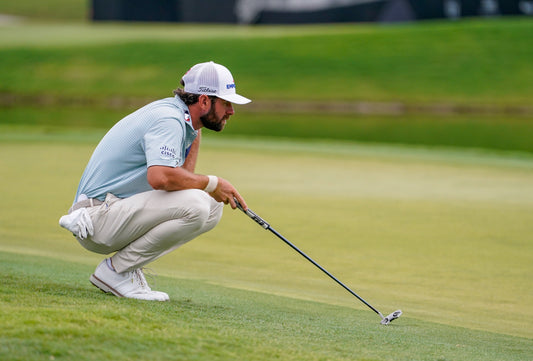
On the second hole Sunday, Young called a penalty on himself after his ball moved at address. That is the sort of moment that can create noise, even for a player with a sizable lead. Instead, he hit it to the green and buried a 13 1/2-foot par putt.
That is a pressure putt.
Not because it won the tournament right there. It did not. It mattered because it stopped the day from changing tone. It kept frustration from creeping in. It told everyone in the group, and probably told Young himself, that the mistake was not going to become a trend.
That is one of the most underrated skills in golf. So many players respond to a bad break or a self-inflicted mistake by trying to force the next shot. The better move is usually steadier than that. Reset. Accept it. Roll the next putt with conviction. Young did exactly that, and from there the round never got out of his hands. Scottie Scheffler even said afterward that Young was “making putts from anywhere,” which is about as clean a summary of the week as you can get.
Stewart Cink Showed What Veteran Putting Really Looks Like
Stewart Cink’s win at the Regions Tradition had a different kind of pressure to it. He is 52, he is playing excellent golf and he came into Sunday trying to capture another senior major after already winning the Senior PGA Championship two weeks earlier. He got it done, shooting 69 to finish at 18-under 270 and win by three shots.
The key stretch came early on the back nine, when Cink made consecutive birdies on Nos. 11 and 12 to stretch the lead. He later closed with a three-putt par on the final hole, which sounds clunky until you understand the moment. By then, the tournament was under control. He did not need something heroic. He needed something stable.
That is a different form of pressure putting, but it is pressure putting all the same.
Veteran players understand that every putt does not need to be attacked. Sometimes the smartest putt in the tournament is the one that removes disaster from the equation. Good speed. Smart target. Zero drama. Cink’s week was a nice reminder that experienced putting is often about knowing exactly what the moment requires and refusing to do more than that.
Most amateurs would lower scores immediately if they treated more first putts that way. Not every long look needs to be rammed at the cup. Not every birdie chance needs to turn into a comebacker with teeth. Protecting a score is a skill. Cink showed that beautifully.
Pressure is Not Always Loud
That may have been the biggest takeaway from the week.
Korda’s pressure putting looked like control. Young’s looked like resilience. Cink’s looked like maturity. Different tours, different tempos, different situations. Same basic truth.
Pressure on the greens is not always the six-footer on the last hole with everyone watching. Sometimes it is the bogey putt that keeps a card clean. Sometimes it is the par save right after your heart rate jumps. Sometimes it is the long lag that makes sure a lead stays comfortable.
Those are the putts that shape tournaments, and they are also the putts that shape your Saturday game.
If you want to become a better putter, do not just practice trying to make everything. Practice protecting the round. Practice resetting after mistakes. Practice pace control when your instinct says to get aggressive. That is where real putting confidence gets built.
A Simple PrimePutt Challenge for this Week
Build a three-part session around the same three themes we saw last week.
Start with five putts from 5 feet and treat each one like the putt that stops a hole from getting worse. Then move to five putts from 8 feet and give yourself only one look at each, focusing on routine and commitment more than makes. Finish with three lag putts from 25 to 35 feet where the only goal is to get every ball inside a 3-foot circle.
That is the kind of practice that translates.
You are not just chasing makes. You are training for moments.
YTD Putting Stats on the PGA TOUR and LPGA Tour
On the PGA TOUR, the current putting average leaders are Jacob Bridgeman and Scottie Scheffler at 1.670, followed by Jimmy Stanger at 1.670, Akshay Bhatia at 1.680 and Ludvig Åberg at 1.680. PGA TOUR’s official stats page also lists Blades Brown at 1.665 on the detailed putting-average page, which suggests the official leaderboard views are not perfectly synchronized at the moment, so I would treat the category as fluid heading into this week.
On the LPGA Tour, the official putting leaders by average putts per round are Ariya Jutanugarn (27.86), Mi Hyang Lee (27.91), Hyo Joo Kim (27.96), Minami Katsu (27.96) and Gemma Dryburgh (28.08).
That closing stat snapshot fits this week’s theme nicely. Whether it is Korda continuing her relentless run, Young refusing to let one penalty create doubt or Cink managing a lead like a veteran closer, pressure putting is rarely random. Over time, the best putters keep showing up for the same reason: they make the right putt for the moment.
Pressure Putts drops every Monday with the week’s best putting stories, stats, and drills from the PGA TOUR, LPGA, and DP World Tour. Got a putting question or drill request? Drop us a line.


