


Compiled by Multiple-Award-Winning PGA Professional Brendon R. Elliott, PrimePutt’s Director of Instruction and Lead Writer
Augusta Was Won on the Greens, Even in a Week That Felt Bigger Than Putting
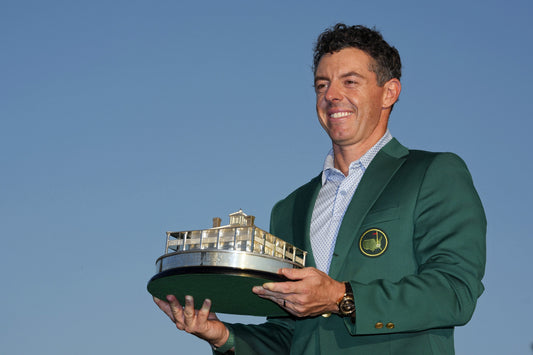
The Masters always turns putting into theater. Augusta National does that better than any place in golf because it asks for more than a hot putter. It asks for nerve, pace control, clean reads and the emotional discipline to survive the putts you miss. That was the story again this past week, as Rory McIlroy defended his title at 12 under, one shot ahead of Scottie Scheffler, with Justin Rose, Cameron Young, Russell Henley and Tyrrell Hatton tied for third at 10 under.
This was not a week where one player simply rolled in everything and ran away from the field. It was a week where the contenders all had quality putting stretches, but McIlroy handled the biggest moments on Augusta’s glassy, pressure-soaked greens just a little better than everybody else. Reuters noted the course played unusually dry and firm, which only raised the premium on lag speed and on the kind of nervy second putts that decide major championships.

The Numbers That Tell Augusta’s Story
Masters.com’s putting stats page gives a useful snapshot of just how tight the margins were among the main contenders. McIlroy finished the week at 1.54 putts per GIR. Justin Rose was at 1.58. Russell Henley was at 1.56. Cameron Young checked in at 1.60 and Scheffler at 1.61. Those are all strong numbers under Augusta pressure, and they tell us something important: this year’s Masters was less about one player lapping the field with the putter and more about who made the right putts at the right times.
That is what makes Augusta such a fascinating putting test. It is not only about make percentage from inside 10 feet. It is about how many stressful comeback putts you leave yourself, how many 35-footers you can cozy into tap-in range and whether you can keep your head after one bad read or one poor speed putt. That is why a player can putt well for the week and still lose the tournament on two or three critical greens. This Masters gave us several examples of exactly that.
Rory’s Winning Week Was About Timely Putts
McIlroy’s second round was the first big signal. He shot 65, made six birdies in his last seven holes and even chipped in at 17 during that electric run to build a record six-shot halfway lead. On paper, that looks like a ball-striking avalanche, and some of it was. But birdie runs like that do not happen at Augusta unless the putter is freeing everything else up. When a player starts converting and feeding momentum to himself, Augusta suddenly feels much smaller.
Sunday was where the putting story became more revealing. McIlroy did not defend his Masters title with a flawless card. He made a double bogey at the fourth and watched the tournament tighten in a hurry. Then came the response. He steadied himself, made birdies at 7 and 8, then hit the decisive shot of the day at the 12th to seven feet and converted. He added another birdie at 13 and from there managed the rest of the round well enough to finish the job. That is what championship putting often looks like at Augusta. It is not perfection. It is emotional recovery followed by a handful of fearless conversions.
To me, that is the most important putting lesson from McIlroy’s week. He did not let one ugly green turn into three. Great putters do not just have reliable mechanics. They have a short memory. On Augusta’s greens, that matters every bit as much as start line and face control. McIlroy’s repeat was built on that kind of reset ability.
Rose, Scheffler and Young Showed the Other Side of Pressure
Justin Rose’s final round may have been the purest example of how cruel Augusta can be. Reuters reported that Rose made five birdies on the front nine and briefly held the lead, only to give ground back with bogeys at 11 and 12 and a missed par putt at 17. That is Augusta in one sentence. You can look brilliant for two hours and then get exposed by three or four feet of overrun, a poor leave or one tentative stroke at the wrong time. Rose putted well enough all week to contend, but the timing of the misses hurt him.
Scheffler’s week told a slightly different story. He played a bogey-free weekend and got all the way to one shot back, yet Reuters noted that a missed opportunity on 17 loomed large. Cameron Young, meanwhile, said afterward that it would have been a different story had a few putts fallen on the back nine. That is why putting is so hard to write about honestly. A player can have a good putting week statistically and still walk away feeling like the tournament slipped away on the greens. At Augusta, both things can be true.

What Augusta Always Teaches About Putting
The mistake many golfers make when they watch the Masters is assuming the winners are just “making everything.” That is almost never the full story. More often, they are controlling pace beautifully, keeping stress off the second putt and cashing in when the highest-leverage moments arrive. McIlroy’s 2026 repeat fit that model. Rose, Scheffler and Young all had stretches where they looked ready to steal it, but McIlroy’s blend of speed control and recovery putting held up a little longer.
For everyday golfers, the takeaway is simple. Stop treating putting as a make-or-miss contest and start treating it as a pressure-management skill. Your first goal is to eliminate the three-putt. Your second goal is to leave yourself a second putt you can stroke with confidence. Your third goal is to trust your routine after a miss. That is not just Augusta advice. That is all-golf advice.
Your Takeaway: Build An Augusta-Style Lag System
If you want to train the skill that mattered most this week, build your practice around long-putt pace control.
Quick drill: “Augusta Ladder Lag Control”
Drop five balls at 20, 30, 40, 50 and 60 feet.
Putt each ball to the same hole.
Your goal is to finish every putt inside a 3-foot circle.
If one finishes outside 3 feet, start over.
This is not a glamorous drill, but it is the exact kind of skill that decides Masters Sundays. When your speed is predictable, your short putts get easier. When your short putts get easier, pressure shrinks. And when pressure shrinks, you give yourself a chance to putt like Rory did when Augusta got loudest.
PGA TOUR YTD SG: Putting Leaders
Entering this week, the PGA TOUR’s year-to-date leaders in Strokes Gained - Putting were:
-
Jacob Bridgeman at 1.339
-
Jake Knapp at 1.285
-
Vince Whaley at 1.046
-
Robert MacIntyre at 0.869
-
Paul Waring at 0.850
That list matters because it reminds us something important: elite putting is rarely random. Players who keep showing up near the top over time usually own a repeatable pace-control system and a calm competitive routine. McIlroy’s Augusta week looked exactly like that, even if it came wrapped in a little more drama than he probably wanted.
Pressure Putts drops every Monday with the week’s best putting stories, stats, and drills from the PGA TOUR, LPGA, and DP World Tour. Got a putting question or drill request? Drop us a line.


