


Two Par 70s, Two Completely Different Reads
Compiled weekly by multiple-award-winning PGA Professional Brendon R. Elliott, PrimePutt’s Director of Instruction and Lead Writer.
This week, the greens tell two very different stories.
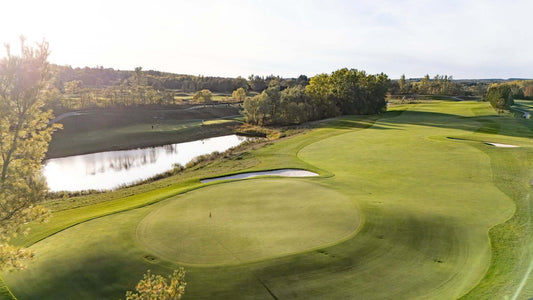
At TPC Toronto at Osprey Valley’s North Course, the RBC Canadian Open returns to a renovated championship venue built on width, drainage, remodeled green complexes and a modern kind of strategic pressure.
At Midland Country Club, the Dow Championship returns to a classic Michigan club where Poa/bent greens at a listed 11.5 on the Stimpmeter turn the LPGA Tour’s only official team event into a putting conversation between partners.
Both courses are par 70s. Both have mixed bent/Poa-style putting surfaces. Both will ask players to control speed.
That is where the similarity ends.
One course is bigger, newer in championship shape and built on a sandy loam base that can change quickly with weather. The other is smaller on the greens, more compact in feel and rooted in the kind of precision that rewards patience, touch and trust.
For PrimePutt readers, this is a great week to study how green design changes putting strategy.
TPC Toronto: The Modern Championship Read
TPC Toronto’s North Course is not just hosting the RBC Canadian Open. It is still introducing itself to a broader PGA Tour audience.
The course has a different energy than many older Canadian Open venues. It is a parkland-style layout with wide corridors, deep bunkers and challenging green sites. The recent renovation pushed it toward a stronger championship identity, especially around the greens.
That matters because modern green complexes are rarely just about the surface.
They are about the shot that feeds into it, the miss that surrounds it and the recovery that follows.
At TPC Toronto, the greens are a bentgrass/Poa mix cut at .100 inches. The average green is listed at 6,500 square feet, which gives players room, but not necessarily easy room. Bigger greens can create more long putts, more segmented targets and more lag-putting stress.
That is the first PrimePutt key this week: distance control will matter as much as make rate.
A player can hit a green and still leave himself 55 feet over a ridge or across a subtle shelf. From there, the goal is not simply to make a good stroke. The goal is to avoid the three-putt that turns a safe approach into a lost shot.
The Drainage Story Matters
The North Course sits on sandy loam and was built on a former gravel pit, with drainage described as excellent.
That detail matters more than most golfers realize.
Good drainage can help a course recover quickly from rain. It can also allow greens to firm back up faster after moisture moves through. With heat, humidity and storms part of the early-week weather story, the maintenance challenge may be one of constant adjustment.
A course that drains well can change personality from morning to afternoon. Putts can feel a touch slower after moisture, then gradually regain speed as the surface dries. Approach shots can stop early in one window, then release more in another.
For players, that means the practice green cannot be treated as a one-time answer.
The best putters will keep updating their speed picture all day.
Everyday golfers should do the same.
Do not decide on No. 1 how the greens will behave all round. Re-check speed every few holes. Pay attention to uphill putts, downhill putts and the first putt after a weather shift.
Midland Country Club: Smaller Greens, Tighter Conversations

Midland Country Club gives the Dow Championship a completely different putting identity.
The greens are Poa annua/bentgrass, cut at .105 inches, with a listed Stimpmeter of 11.5. The average green size is 5,200 square feet, significantly smaller than TPC Toronto. The soil base is clay, and water is in play on 10 holes.
That combination creates a different kind of test.
Smaller greens reduce some lag-putting length, but they increase the importance of approach placement. A miss to the wrong section can leave a putt that is technically shorter but much harder to read. On Poa/bent surfaces, especially as the day gets longer, players also need to be ready for tiny texture changes.
The Dow Championship adds another layer because it is a team event.
Putting is not only individual.
It is shared.
In alternate-shot situations, one player may be leaving the other a downhill six-footer, a 25-footer from the wrong tier or a first putt after a tricky recovery. In best-ball formats, aggressive putting can make sense, but only when the team understands who has the safer par route and who can chase.
That makes Midland one of the more interesting putting weeks of the LPGA season.
Not because it is the longest course. Not because the greens are the largest.
Because the reads are shared, and the consequences are shared too.
What Poa/Bent Asks From Players
Poa/bentgrass greens are not automatically bumpy or unpredictable. That is an outdated shortcut. Well-maintained Poa/bent can be excellent, and both tournament venues this week are prepared for elite competition.
But mixed surfaces do ask players to be aware.
The first thing to watch is pace consistency. When turf texture changes slightly, the ball can lose a little energy late. That does not mean the greens are bad. It means dying-speed putts need full commitment.
The second thing to watch is afternoon patience.
Players who start over-reading small imperfections can get tentative. They begin to guide the ball instead of rolling it. That is when short putts become stressful.
The best answer is simple.
Pick the start line. Choose the speed. Keep the stroke moving.
The PrimePutt Key This Week
This week is not just about who putts the best.
It is about who updates the fastest.
At TPC Toronto, the question is whether players can adjust to a modern, renovated green environment where size, slope, runoff and changing moisture all matter.
At Midland, the question is whether teams can manage smaller Poa/bent targets, choose the right partner rhythm and avoid leaving each other the wrong kind of putts.
The best putters in both places will look decisive.
They will not necessarily make everything.
They will just keep leaving themselves the next putt they can handle.
That is the real skill.
What Everyday Golfers Can Learn
This week’s lesson is simple: stop treating all greens as the same.
A large green asks for speed control. A smaller green asks for approach discipline. A well-drained course may change quickly after weather. A mixed surface may require stronger commitment late in the roll.
Before your next round, give yourself a two-minute green read before you tee off.
Ask yourself:
How big are the greens?
Are they soft or firm?
Do downhill putts keep rolling or slow down?
Are short putts holding their line?
Is the ball losing speed late?
That little scouting report can save shots before your round really begins.
What To Watch This Week
At the RBC Canadian Open, watch how often players hit greens but still face demanding first putts. TPC Toronto’s North Course should reward players who control approach distance and then roll their lag putts with discipline.
At the Dow Championship, watch partner dynamics on and around the greens. The best teams will not just make putts. They will leave each other manageable putts.
That is a different skill.
And at Midland, it may decide the week.
The Greens This Week drops every Wednesday with a closer look at the putting surfaces, course setup and agronomy stories shaping professional golf. For golfers who care about better reads, better speed and better preparation, the greens always have something to teach us.
‘The Greens This Week’ drops every Wednesday and looks at the putting surfaces the best in the world from the PGA TOUR, LPGA Tour and DP World Tour will face in the coming week. Got a putting question or drill request? Drop us a line.


