


Compiled weekly by multiple-award-winning PGA Professional Brendon R. Elliott, PrimePutt’s Director of Instruction and Lead Writer.
This week gives us three very different putting exams. On the PGA TOUR side, the Truist Championship returns to Quail Hollow Club in Charlotte, while the ONEflight Myrtle Beach Classic heads back to The Dunes Golf and Beach Club. On the LPGA Tour, the Mizuho Americas Open shifts to Mountain Ridge Country Club in West Caldwell. Same week, same sport, but three distinct green identities.
Quail Hollow Club
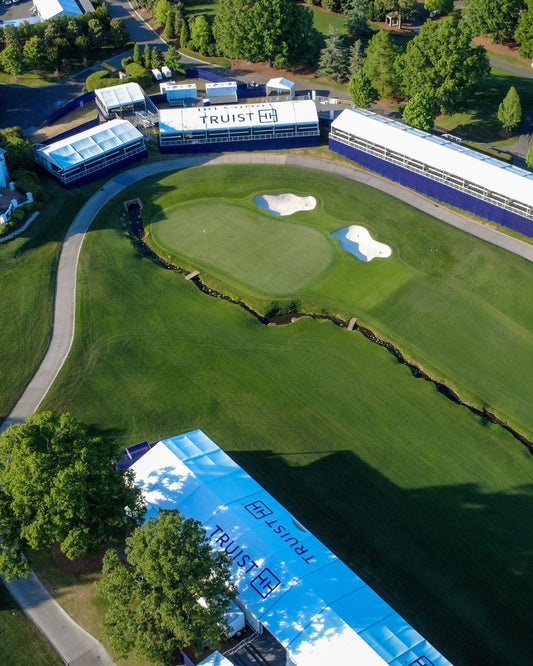
Quail Hollow is the most layered greens test of the bunch. The club’s 2023 upgrade included resurfacing the greens with TifEagle bermudagrass and softening slopes on 12 putting surfaces to better handle faster championship speeds. In recent May setups at Quail Hollow, the greens have been overseeded with Poa trivialis on top of that Bermuda base, with the 2024 and 2025 tournament sheets listing the greens at roughly .125 and .100 inches, respectively. The average green size is 6,578 square feet, so players are not dealing with tiny targets, but rather with surfaces built to accept speed while still demanding precision.

What makes Quail Hollow so intriguing from a putting standpoint is that it is not just about raw pace. It is about how the ball behaves on a spring surface that lives in that transition zone between overseeded feel and underlying Bermuda character. That usually means players who control the start line and speed with conviction tend to separate more than players who simply “putt well enough.” You do not want to leave yourself in the wrong sector here, because these greens can quickly turn a good iron shot into a defensive two-putt. Quail Hollow often asks golfers to think one shot ahead, and that starts with where the ball finishes on the green, not just whether it finds it.
The Dunes Golf and Beach Club

The Dunes is a very different animal. The greens here are Champion ultradwarf bermudagrass cut to .100 inches, and the average green size is about 6,000 square feet. The course sits on mostly sandy soil, drains extremely well and has the kind of coastal setup that tends to keep the surfaces firm, lively and very true when managed well. It is also a place where the rest of the golf course can feel one way, while the greens remind you immediately that you are in the South and on Bermuda.
From a PrimePutt lens, this may be the week’s most grain-sensitive test. Champion ultradwarf can be beautiful when it is clean and dialed in, but it also rewards players who actually read texture and shine, not just slope. Down-grain putts can get slippery in a hurry. Into-the-grain putts can feel as if they are climbing a hill even when they are not. That usually makes The Dunes a place where confident Bermuda putters gain a real edge, especially inside that six-to-12-foot range where indecision gets exposed. If Quail Hollow is about managing championship speed over layered surfaces, The Dunes is more about owning your read and committing to it.
Mountain Ridge Country Club

Mountain Ridge brings a classic Northeast feel back into the conversation. The Mizuho Americas Open is at Mountain Ridge this week, and the most recent public pro-event setup sheet I could find for this venue lists Poa annua greens at .105 inches, an average green size of 8,500 square feet and a Donald Ross design that mixes sandy loam on one side of the course with more clay on the other. The club’s own history and course notes reinforce the Ross identity, with elevated greens, internal contour and plenty of natural movement across the property.
That combination should make Mountain Ridge the week’s most nuanced LPGA putting examination. Bigger greens do not always mean easier greens, and Ross courses have a habit of punishing players who finish on the wrong shelf or in the wrong quadrant. Poa annua in the Northeast can reward confident strokes, but it also places a premium on pace control as the day wears on and traffic builds. For the best putters in the field, this looks like a venue where lag putting, sectional awareness and avoiding the tempting but wrong side of a hole location could matter just as much as converting birdie chances. This has the feel of a place where smart putting may outshine flashy putting.
Final Read
What I love about this week is how clearly it shows that “good greens” do not all ask the same questions. Quail Hollow is a polished, championship-speed exam with transitional complexity under the feet. The Dunes is a grainy, southern Bermuda challenge that demands total commitment. Mountain Ridge looks like the thinking player’s test, with bigger Ross greens, contour and touch all working together. For anyone who loves the art of putting, this is one of those weeks where the surfaces are not the background. They are very much part of the story.
‘The Greens This Week’ drops every Wednesday and looks at the putting surfaces the best in the world from the PGA TOUR, LPGA Tour and DP World Tour will face in the coming week. Got a putting question or drill request? Drop us a line.


